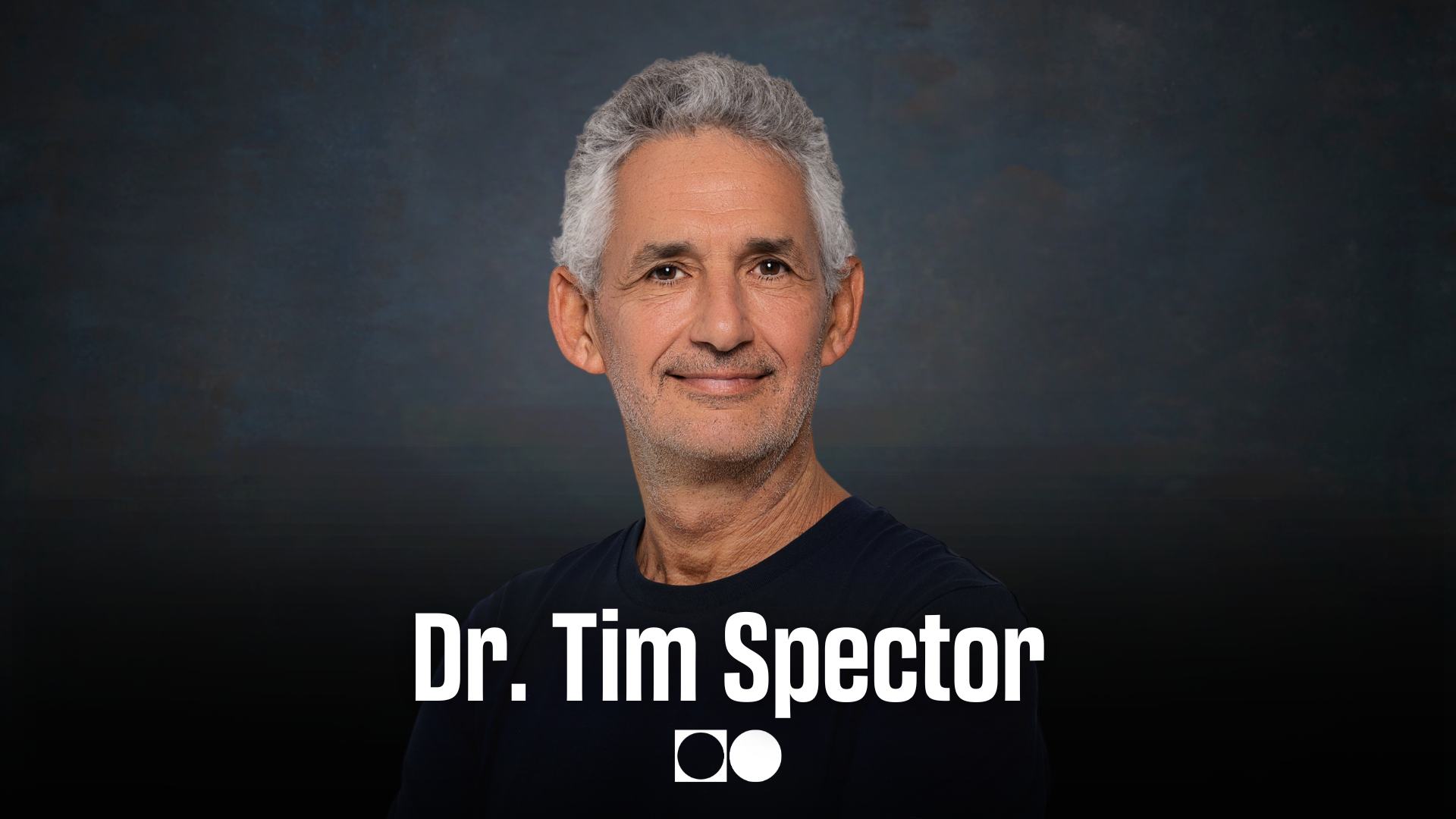
Tim Spector 1 source tracked
Professor of Genetic Epidemiology at King's College London, scientific co-founder of ZOE, and researcher on the gut microbiome and nutrition.
About Tim Spector →
Tim Spector is a British epidemiologist and physician, Professor of Genetic Epidemiology at King's College London, and Director of the TwinsUK Registry, which he founded in 1992. He is a scientific co-founder of ZOE, a personalised nutrition company that runs the ZOE PREDICT studies and the ZOE Health Study (originally launched as the COVID Symptom Study app in 2020). His research focuses on the gut microbiome, personalised nutrition, twin studies, and epigenetics, and he has published several hundred scientific papers. He is the author of popular books including The Diet Myth, Spoon-Fed, and Food for Life. He was appointed OBE in 2020 for services to the COVID-19 response and is a Fellow of the Academy of Medical Sciences.
-
In a protocol
Stop eating and drinking 2 hours before bed for better sleep quality, since digestion impairs deep sleep.
“I try not to eat or drink within two hours of going to bed
ZS▶ 41:50DosageStop intake 2 hours before bedtimeCertaintyexplicitpersonal use -
In a protocol
Installed blackout curtains to improve sleep environment.
“blackout curtains now in the room
ZS▶ 43:40Certaintypersonal onlypersonal use -
In a protocol
Floss daily (or use interdental picks) until gums stop bleeding to reduce oral inflammation linked to dementia and heart disease risk.
“your risk of dementia can be reduced by something like 20 to 40% just by cleaning your teeth optimally
ZS▶ 15:00DosageOnce daily, twice if problem areas; keep going until no bleedingCertaintyexplicitstrong endorsement -
Take folic acid supplements if blood tests show low levels — beneficial for cognition in older adults, not just pregnancy.
“folic acid supplementation is good for adult brains
ZS▶ 29:40DosageDailyCaveatsToo much folate can cause epigenetic changes; test first; most with leafy greens have enoughCertaintyhedgedpersonal use -
In a protocol
Prefer glass over plastic for food storage and packaging to limit microplastic exposure.
“try not to use glass rather than plastic
ZS▶ 20:10Certaintyhedgedrecommendation -
In a protocol
Go to bed half an hour earlier to extend sleep duration and give brain more time to rest.
“I go to bed half an hour earlier
ZS▶ 41:40Dosage30 min earlier than previous routineCertaintypersonal onlypersonal use -
In a protocol
Spector uses interdental picks to clean hard-to-reach areas at the back of the mouth.
“I use these special picks now
ZS▶ 16:15DosageDailyCertaintypersonal onlypersonal use -
Eat leafy greens to get sufficient folate from diet, avoiding need for supplementation in most people.
“as long as you eat leafy greens, you're going to be getting a lot
ZS▶ 31:10Certaintyexplicitrecommendation -
In a protocol
Use a reusable metal water bottle instead of plastic to reduce microplastic exposure.
“use my Zoe metal water bottle rather than a plastic one
ZS▶ 20:00CaveatsEvidence on microplastic harm not definitiveCertaintyhedgedpersonal use -
In a protocol
Try mouth taping during sleep — works dramatically for some (eliminated nighttime dry mouth) but evidence is mixed and may be harmful for others.
“I'm not thirsty at all and my sleep quality is much better
ZS▶ 45:00DosageOvernightCaveatsCan be harmful in some people; consult a doctor if ill; highly personalizedCertaintyhedgedpersonal use -
In a protocol
Switched to a natural fennel-based toothpaste to avoid microplastics and additives found in conventional toothpastes.
“I use a natural toothpaste now that's made with fennel
ZS▶ 20:30CaveatsScience is not perfect on microplasticsCertaintypersonal onlypersonal use -
Get an omega-3 index blood test to measure EPA/DPA in red blood cells before deciding on supplementation.
“something called the Omega 3 index
ZS▶ 22:30CaveatsNot standard in UK, common in USCertaintyexplicitrecommendation -
In a protocol
Earplugs that play soft sea sounds to block disturbances during sleep.
“earplugs that play sounds of the sea that are soft
ZS▶ 44:00Certaintypersonal onlypersonal use -
In a protocol
Add weight/resistance training 2-3 times a week (20-30 min) to build lean mass and prevent aging-related decline.
“two or three times a week to have 20 to 30 minutes where I'm using these weights
ZS▶ 38:00Dosage2-3x weekly, 20-30 minutes, light weights acceptableCertaintyexplicitstrong endorsement -
Get sunlight on skin (especially in winter) to raise vitamin D naturally; don't always block sun.
“Winter is a time when we should be getting as much sun as we can
ZS▶ 36:00DosageEspecially in winter; avoid sunburnCaveatsStill protect from sunburnCertaintyexplicitrecommendation -
Take B12 supplements if at risk (vegan) or test shows low levels, as deficiency causes nerve, blood, and energy problems.
“Definitely worth taking B12 supplements if you're at risk or you have low levels
ZS▶ 28:20DosageDailyCaveatsOnly if blood test confirms low levels or you're veganCertaintyexplicitpersonal use -
In a protocol
Use a good water filter to remove microplastics and other chemicals from drinking water.
“Got a good water filter as well
ZS▶ 47:50Certaintyexplicitrecommendation -
Organic (prompted)
Tried creatine but stopped — only 1.7% muscle mass benefit, unpleasant to take, and cognitive benefits not yet proven.
“I'm gonna stop it. It's not worth it
ZS▶ 40:50CaveatsCognitive/dementia benefit still under investigationCertaintypersonal onlymild caution -
Alternative
Don't take vitamin D supplements at borderline levels — most studies show no benefit for fractures or general health except in specific conditions.
“I'm dead against vitamin D tablets
ZS▶ 32:40CaveatsMay still be useful for MS risk, type 2 diabetes risk, or acute viral infectionCertaintyexplicitmild caution -
Read James Nestor's book Breath — though Spector says latest science is less convincing than the book suggests.
“I read the book Breath and did look it up
ZS▶ 44:40CaveatsLatest science less convincing than book impliesCertaintyhedgedoffhand mention -
Alternative
For most people with average omega-3 levels, supplements aren't worthwhile; only consider if levels are low and you can't get fish via diet.
“people average levels don't, but people with low levels do
ZS▶ 22:50CaveatsWhole food likely better; supplement only if blood test shows deficiencyCertaintyhedgedmild caution