Five Habits to Reduce Stress in 2026
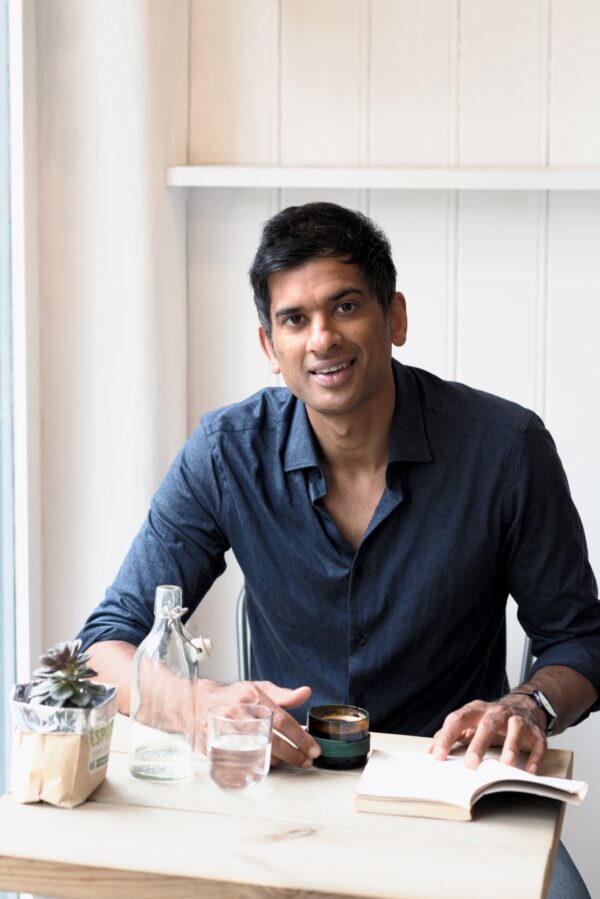
Chatterjee's explicitly numbered five habits framework for managing chronic stress: (1) morning routine, (2) a portable breathing technique, (3) stop taking things personally, (4) practice true prevention, (5) prioritize sleep.
Assembled by Cited from Rangan Chatterjee's recorded recommendations across multiple sources. It is not an ordered program and was not created or endorsed by them — it's our grouping of what they've said on the record.
Components
15-
In a protocol
Start each day with an intentional morning routine (even 5 minutes) instead of immediately scrolling phones, so you reduce accumulation of micro-stress doses.
“have a morning routine
FB▶ 23:09DosageAt least 5 minutes; ideally 15 minutes (e.g., 10 min meditation + 5 min journaling) without checking phoneCaveatsSpecific content less important than intentionalityCertaintyexplicitstrong endorsementHabit #1 — intentional morning routine -
Endorsement In a protocol
Chatterjee personally uses and recommends the Way meditation app, praising its simplicity and lack of choice paralysis.
“the Way app is one of the best meditation apps I've ever come across
FB▶ 28:50DosageUse most mornings; 30 free sessions via thewayapp.com/livemoreCaveatsChatterjee discloses he has invested in the companyCertaintyexplicitstrong endorsementSuggested tool to support the morning routine (meditation app) -
In a protocol
Don't use your phone as your alarm clock — it leads to immediate phone scrolling and rapid accumulation of micro-stress doses upon waking.
“uses your phone as your alarm clock
FB▶ 23:50Certaintyexplicitmild cautionAnti-recommendation embedded in the morning routine habit -
In a protocol
Breathe in for 3 counts, hold for 4, exhale for 5; longer exhale activates the relaxation response.
“breathe in for three... hold for four... breathe out for five
FB▶ 33:15DosageIn for 3, hold 4, out for 5; ideally nasal; ~1 minute (5 cycles). If too hard, scale to 2-3-4.CaveatsIf nasal breathing too difficult, exhaling through the mouth is acceptableCertaintyexplicitstrong endorsementHabit #2 — portable breathing technique (3-4-5 breath as his preferred example) -
In a protocol
Practice not taking others' behavior personally — recognize it usually reflects their inner state, not you; start with strangers before close relationships.
“stop taking things personally
FB▶ 38:50DosagePractice with strangers first (e.g., supermarket), reflect later if you react; build space between stimulus and responseCaveatsHarder with close relationships; takes practiceCertaintyexplicitstrong endorsementHabit #3 — stop taking things personally -
In a protocol
Test fasting insulin regularly — it's one of the earliest markers to shift years before type 2 diabetes or metabolic disease shows up.
“one of the earliest things to go off... is your fasting insulin levels
FB▶ 52:40DosageTest periodically; DoHealth checks 3x/yearCaveatsOften not offered by standard GP; may need private testingCertaintyexplicitstrong endorsementHabit #4 — true prevention; fasting insulin as flagship biomarker -
In a protocol
Get HbA1c (average blood sugar) checked as part of true prevention.
“things like HbA1c, your average blood sugar
FB▶ 1:00:25CertaintyexplicitrecommendationAdditional biomarker named under true prevention -
In a protocol
Check homocysteine levels — high homocysteine is associated with cognitive decline and can be brought down if you know it's elevated.
“high homocysteine levels... are associated with cognitive decline
FB▶ 1:00:35CaveatsNot commonly tested by standard practiceCertaintyexplicitrecommendationAdditional biomarker named under true prevention -
In a protocol
Include liver function tests as part of preventive screening.
“Liver function tests
FB▶ 1:00:50Certaintyexplicitoffhand mentionAdditional biomarker named under true prevention -
Endorsement In a protocol
Chatterjee's new personalized prevention app/service tracking 11 core biomarkers (including fasting insulin) three times a year, paired with personalized lifestyle actions.
“I decided to create Do Health
FB▶ 53:20DosageBloods 3x/year on 11 core biomarkers (energy, circulation, inflammation); weekly personalized actions via appCaveatsOnly launching in UK initially; waitlist via drchatterjee.com/doCertaintyexplicitstrong endorsementHis own service operationalizing the true prevention habit -
In a protocol
Make sleep a priority — it may be the single most impactful lever for reducing stress, improving mood, motivation, willpower, and lowering amygdala reactivity.
“prioritize sleep
FB▶ 1:01:20DosageAim for 7.5-8 hours; 5 hours leaves amygdala up to 50% more activeCertaintyexplicitstrong endorsementHabit #5 — prioritize sleep -
In a protocol
Expose your eyes to natural outdoor light shortly after waking to set circadian rhythm and improve nighttime sleep.
“expose your eyes to natural light as soon as you can after waking
FB▶ 1:05:20Dosage15-20 minutes of natural light as soon as it's light outside; if missed, 20 minutes at lunchtime helpsCertaintyexplicitstrong endorsementSleep sub-tip: morning natural light exposure -
In a protocol
Avoid caffeine after noon (or try a 7-day caffeine-free trial) if you're struggling with sleep; tolerance often decreases with age.
“try not having caffeine after 12 o'clock noon
FB▶ 1:06:20DosageTrial: no caffeine after 12pm for 7 days; if needed, full 7-day elimination (taper if necessary)CaveatsCaffeine also in green tea and dark chocolate; tolerance changes with ageCertaintyexplicitmild cautionSleep sub-tip: limit caffeine -
In a protocol
Avoid dark chocolate after 3-4pm because its caffeine content can disrupt sleep.
“I will not have dark chocolates after about three or 4pm
FB▶ 1:07:35DosageNo dark chocolate after 3-4pmCaveatsPersonal practiceCertaintypersonal onlypersonal useSleep sub-tip: avoid dark chocolate after 3-4pm -
In a protocol
In the hour before bed, dim lights, close laptop, avoid work emails; read, stretch, listen to music or play cards to send the brain relaxation signals.
“what are you doing in the one hour before bed?
FB▶ 1:08:10Dosage30-60 minutes pre-bed: dim lights, candles or lamps only, no laptop/work emails, calming activityCertaintyexplicitstrong endorsementSleep sub-tip: wind-down hour before bed
How this protocol has evolved
Builds on the micro-stress dose framework first introduced in his 2018 book The Stress Solution; follows the same structure as his prior end-of-year solo episodes.