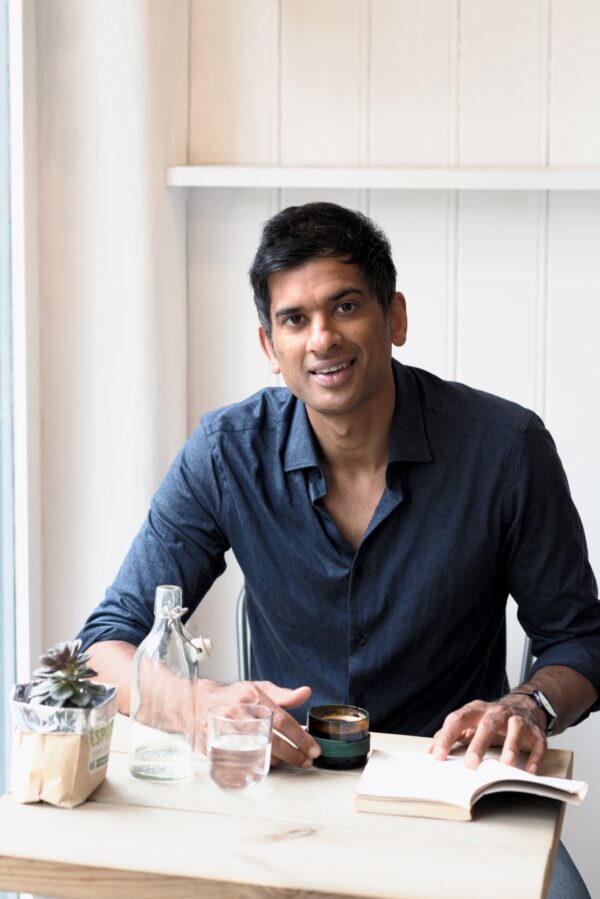
Rangan Chatterjee 1 source tracked
British GP, author, and host of the "Feel Better, Live More" podcast, focused on lifestyle medicine.
About Rangan Chatterjee →
Rangan Chatterjee is a British general practitioner, author, and broadcaster known for his work in lifestyle medicine, which emphasizes food, sleep, movement, and stress management as foundations of health. He studied medicine at the University of Edinburgh and has additional training in immunology. He came to wider public attention through the BBC One series "Doctor in the House" and has appeared as a resident doctor on BBC Breakfast. He hosts the podcast "Feel Better, Live More" and has written several bestselling books, including "The 4 Pillar Plan," aimed at helping general audiences make sustainable changes to improve long-term health.
-
In a protocol
Breathe in for 3 counts, hold for 4, exhale for 5; longer exhale activates the relaxation response.
“breathe in for three... hold for four... breathe out for five
FB▶ 33:15DosageIn for 3, hold 4, out for 5; ideally nasal; ~1 minute (5 cycles). If too hard, scale to 2-3-4.CaveatsIf nasal breathing too difficult, exhaling through the mouth is acceptableCertaintyexplicitstrong endorsement -
Sponsor read
Sponsor: AG1 daily greens drink containing vitamin C, vitamin A, zinc and selenium to support immune function.
“Agee One is a daily health drink
FB▶ 15:50DosageOne scoop dailyCaveatsSponsor read; offer at drinkageeone.com/livemoreCertaintypersonal onlyrecommendation -
Endorsement In a protocol
Chatterjee's new personalized prevention app/service tracking 11 core biomarkers (including fasting insulin) three times a year, paired with personalized lifestyle actions.
“I decided to create Do Health
FB▶ 53:20DosageBloods 3x/year on 11 core biomarkers (energy, circulation, inflammation); weekly personalized actions via appCaveatsOnly launching in UK initially; waitlist via drchatterjee.com/doCertaintyexplicitstrong endorsement -
Endorsement
Chatterjee's book on happiness and stress management, re-released January 2026 with new format and foreword.
“Happy Mind, Happy Life
FB▶ 1:11:50CaveatsAuthor's own bookCertaintyexplicitrecommendation -
In a protocol
Check homocysteine levels — high homocysteine is associated with cognitive decline and can be brought down if you know it's elevated.
“high homocysteine levels... are associated with cognitive decline
FB▶ 1:00:35CaveatsNot commonly tested by standard practiceCertaintyexplicitrecommendation -
In a protocol
Start each day with an intentional morning routine (even 5 minutes) instead of immediately scrolling phones, so you reduce accumulation of micro-stress doses.
“have a morning routine
FB▶ 23:09DosageAt least 5 minutes; ideally 15 minutes (e.g., 10 min meditation + 5 min journaling) without checking phoneCaveatsSpecific content less important than intentionalityCertaintyexplicitstrong endorsement -
In a protocol
Include liver function tests as part of preventive screening.
“Liver function tests
FB▶ 1:00:50Certaintyexplicitoffhand mention -
Alternative
Take a 20-minute walk around the block at lunchtime without checking your phone to discharge accumulated micro-stress doses.
“go for a 20 minute walk around the block and don't look at your phone
FB▶ 22:10Dosage20 minutes at lunchtime, no phoneCertaintyexplicitrecommendation -
Endorsement
Chatterjee's book on breaking habits that hold you back — recommended for those wanting to change reactive patterns.
“Make Change That Lasts
FB▶ 1:12:20CaveatsAuthor's own bookCertaintyexplicitrecommendation -
In a protocol
Expose your eyes to natural outdoor light shortly after waking to set circadian rhythm and improve nighttime sleep.
“expose your eyes to natural light as soon as you can after waking
FB▶ 1:05:20Dosage15-20 minutes of natural light as soon as it's light outside; if missed, 20 minutes at lunchtime helpsCertaintyexplicitstrong endorsement -
In a protocol
Make sleep a priority — it may be the single most impactful lever for reducing stress, improving mood, motivation, willpower, and lowering amygdala reactivity.
“prioritize sleep
FB▶ 1:01:20DosageAim for 7.5-8 hours; 5 hours leaves amygdala up to 50% more activeCertaintyexplicitstrong endorsement -
In a protocol
Practice not taking others' behavior personally — recognize it usually reflects their inner state, not you; start with strangers before close relationships.
“stop taking things personally
FB▶ 38:50DosagePractice with strangers first (e.g., supermarket), reflect later if you react; build space between stimulus and responseCaveatsHarder with close relationships; takes practiceCertaintyexplicitstrong endorsement -
Endorsement
Chatterjee's 2018 book introducing the concept of micro-stress doses.
“my 2018 book, The Stress Solution
FB▶ 12:40CaveatsAuthor's own bookCertaintyexplicitoffhand mention -
Endorsement In a protocol
Chatterjee personally uses and recommends the Way meditation app, praising its simplicity and lack of choice paralysis.
“the Way app is one of the best meditation apps I've ever come across
FB▶ 28:50DosageUse most mornings; 30 free sessions via thewayapp.com/livemoreCaveatsChatterjee discloses he has invested in the companyCertaintyexplicitstrong endorsement -
In a protocol
In the hour before bed, dim lights, close laptop, avoid work emails; read, stretch, listen to music or play cards to send the brain relaxation signals.
“what are you doing in the one hour before bed?
FB▶ 1:08:10Dosage30-60 minutes pre-bed: dim lights, candles or lamps only, no laptop/work emails, calming activityCertaintyexplicitstrong endorsement -
In a protocol
Don't use your phone as your alarm clock — it leads to immediate phone scrolling and rapid accumulation of micro-stress doses upon waking.
“uses your phone as your alarm clock
FB▶ 23:50Certaintyexplicitmild caution -
In a protocol
Avoid caffeine after noon (or try a 7-day caffeine-free trial) if you're struggling with sleep; tolerance often decreases with age.
“try not having caffeine after 12 o'clock noon
FB▶ 1:06:20DosageTrial: no caffeine after 12pm for 7 days; if needed, full 7-day elimination (taper if necessary)CaveatsCaffeine also in green tea and dark chocolate; tolerance changes with ageCertaintyexplicitmild caution -
In a protocol
Avoid dark chocolate after 3-4pm because its caffeine content can disrupt sleep.
“I will not have dark chocolates after about three or 4pm
FB▶ 1:07:35DosageNo dark chocolate after 3-4pmCaveatsPersonal practiceCertaintypersonal onlypersonal use