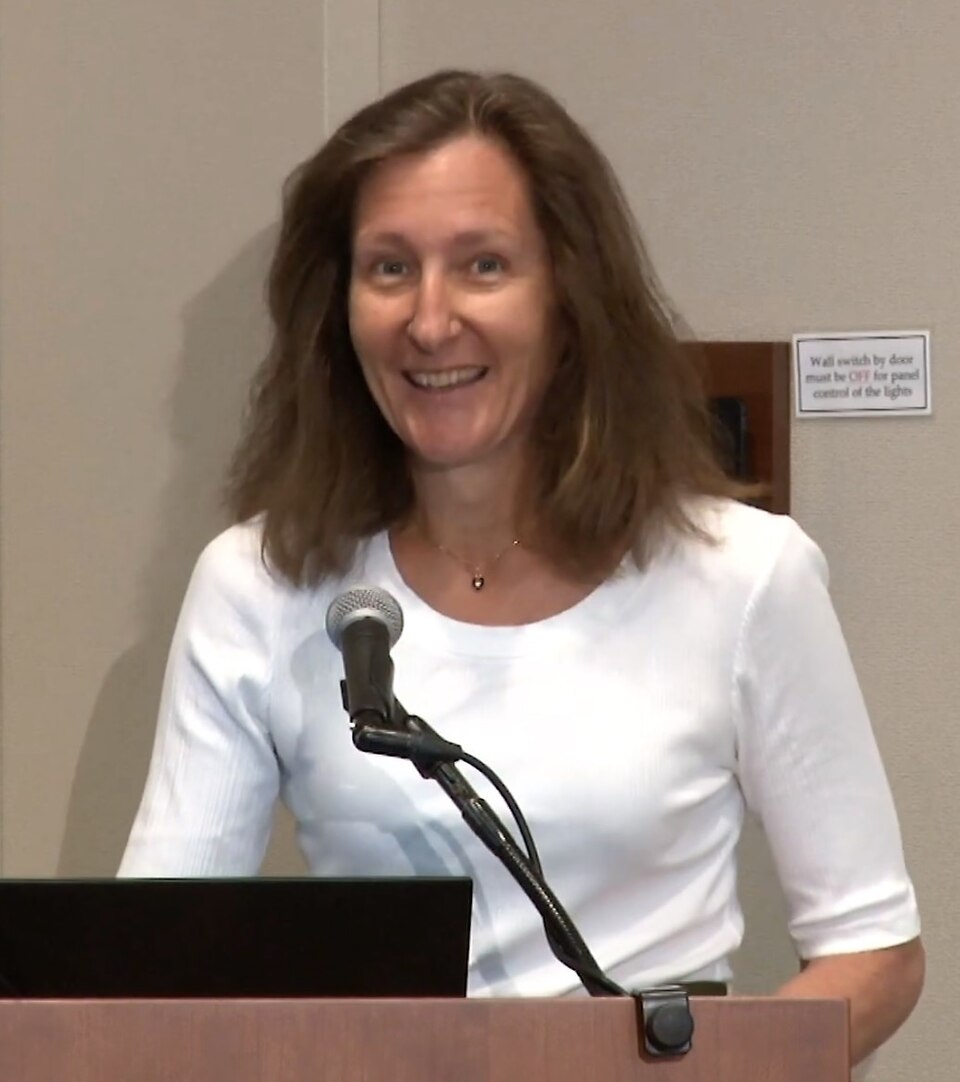
Anna Lembke 1 source tracked
Psychiatrist and professor at Stanford School of Medicine specializing in addiction medicine; author of Dopamine Nation.
About Anna Lembke →
Anna Lembke, M.D., is a professor of psychiatry and behavioral sciences at Stanford University School of Medicine, where she serves as medical director of addiction medicine and chief of the Stanford Addiction Medicine Dual Diagnosis Clinic. She also directs the Stanford Addiction Medicine Fellowship. A clinician and researcher, she has published extensively in peer-reviewed journals, testified before Congress, and served as an expert witness in opioid litigation. She received her undergraduate degree from Yale and her M.D. from Stanford. Lembke is the author of Drug Dealer, MD and the 2021 bestseller Dopamine Nation: Finding Balance in the Age of Indulgence, which examines how modern high-reward stimuli — including digital media — drive compulsive overconsumption. She also appeared in the Netflix documentary The Social Dilemma.
-
Guest recommendation In a protocol
Lembke strongly supports 12-step programs for recovery, noting their emphasis on character inventory, acknowledging lack of control, and spiritual surrender; particularly effective in severe addiction.
“the 12 steps can be so effective
HL▶ 32:40DosagePractice the 12 steps; take personal inventory; acknowledge contribution to problemsCertaintyexplicitstrong endorsement -
Guest recommendation In a protocol
Lembke recommends a 30-day abstinence from the substance or behavior of concern as an experiment, because roughly 30 days is the average time needed to begin resetting reward pathways.
“give it up for 30 days, not a lifetime
HL▶ 20:00Dosage30 days of abstinence; acute withdrawal typically 10-14 days, most feel significantly better by weeks 3-4CaveatsSevere cases may need higher level of care; not a complete recovery program on its ownCertaintyexplicitrecommendation -
Guest recommendation
For sex addiction patients, Lembke notes recovery only became sustained when they stopped fantasizing, since fantasy itself releases dopamine and serves as the drug.
“could not get into recovery until they stopped fantasizing
HL▶ 2:11:20DosageIntentional abstinence from sexual fantasyCertaintyexplicitrecommendation -
Guest recommendation In a protocol
Lembke notes ACT as a newer psychotherapy that embraces acceptance and values-based living and resonates with patients.
“acceptance and commitment therapy...completely resonating with people
HL▶ 1:18:40Certaintyexplicitrecommendation -
Guest recommendation
Lembke mentions buprenorphine as a medication used to restore homeostasis in opioid addiction by occupying reward pathway with a long half-life.
“buprenorphine or methadone to treat opioid addiction
HL▶ 15:55CaveatsPrescription medication requiring clinical managementCertaintyexplicitrecommendation -
Guest recommendation
Lembke recommends Codependents Anonymous 12-step program for people struggling with codependency.
“codependency anonymous and like take care of themselves
HL▶ 2:16:00DosageAttend meetingsCertaintyexplicitrecommendation -
Guest recommendation In a protocol
Lembke describes a personal practice of not using any screens until after completing morning routine (exercise, breakfast, making bed, teeth) to preserve a different mental wavelength.
“I do not go on any device or look at any screen until I have finished my morning routine
HL▶ 2:04:00DosageNo screens until after morning routine: exercise, breakfast, bed, teethCertaintypersonal onlypersonal use -
Guest recommendation In a protocol
Lembke recommends a core 12-step-rooted practice of focusing only on the next right action rather than trying to engineer distant future outcomes.
“do the next right thing
HL▶ 1:34:40DosageOne day at a time; focus only on the next concrete action within your agencyCertaintyexplicitstrong endorsement -
Guest recommendation Alternative
Lembke reports clinical success using GLP-1 medications in severe alcohol addiction patients who failed other interventions, likely by dampening dopamine release in the reward pathway.
“when we put them on a GLP1, they get into recovery when nothing else works
HL▶ 2:09:00CaveatsEmerging evidence; new toolCertaintyhedgedrecommendation -
Guest recommendation In a protocol
Lembke endorses professional interventionists, often with lived experience of addiction, as helpful for families struggling with an addicted member.
“There are wonderful interventionists out there
HL▶ 35:10Certaintyexplicitrecommendation -
Guest recommendation Alternative
Lembke supports the Montreal Model of in-clinic ketamine combined with psychotherapy for treatment-refractory depression and co-occurring alcohol use disorder.
“the Montreal Model...in combination with psychotherapy
HL▶ 2:05:10DosageIn-clinic administration (not take-home), combined with psychotherapyCaveatsNeed more evidence; not suitable for patients with ketamine addiction historyCertaintyhedgedrecommendation -
Guest recommendation Alternative
Methadone cited as a long-half-life medication to treat opioid addiction by restoring homeostasis without cycling dopamine adaptations.
“buprenorphine or methadone to treat opioid addiction
HL▶ 15:55CaveatsPrescription medication requiring clinical managementCertaintyexplicitrecommendation -
Guest recommendation In a protocol
Lembke recommends praying — even without belief in a higher power — as a daily practice of acknowledging limits of control and asking for help outside oneself.
“I really recommend that people pray, even if they're not sure they believe
HL▶ 1:32:30DosageBegin the day lying in bed with an intentional prayer asking for helpCaveatsDoesn't require belief; take a humble posture and ask for helpCertaintyexplicitstrong endorsement -
Guest recommendation In a protocol
Lembke cites data that people addicted to both alcohol and nicotine who quit both simultaneously have better long-term outcomes than those who quit only alcohol.
“people who gave up both at the same time tend to have better outcomes
HL▶ 19:40DosageQuit both at the same timeCaveatsMeet patients where they are; not always feasibleCertaintyexplicitrecommendation -
Guest recommendation
Lembke recommends spending part of every day off screens, going outside, talking to humans, making mistakes, and doing things you're bad at.
“spending some part of every day out from behind our screens
HL▶ 1:47:00DosageDaily; leave device behind, go outside, cultivate something you'll never be good atCertaintyexplicitrecommendation -
Guest recommendation
Lembke cautions that ketamine is addictive and that take-home prescribing is risky; sees patients severely addicted to ketamine from black market or poorly-screened prescribers.
“ketamine is also addictive
HL▶ 2:05:20CaveatsIn-clinic supervised use (e.g., Montreal Model) with psychotherapy may be appropriateCertaintyexplicitstrong warning -
Guest recommendation In a protocol
Lembke identifies moving video as a particularly potent drug for her and recommends limiting video use, favoring auditory processing (reading, audio) as less vulnerable.
“moving video is really a very potent drug
HL▶ 2:04:25DosageLimit video consumption; prefer reading or audioCaveatsIndividual vulnerabilities varyCertaintypersonal onlymild caution